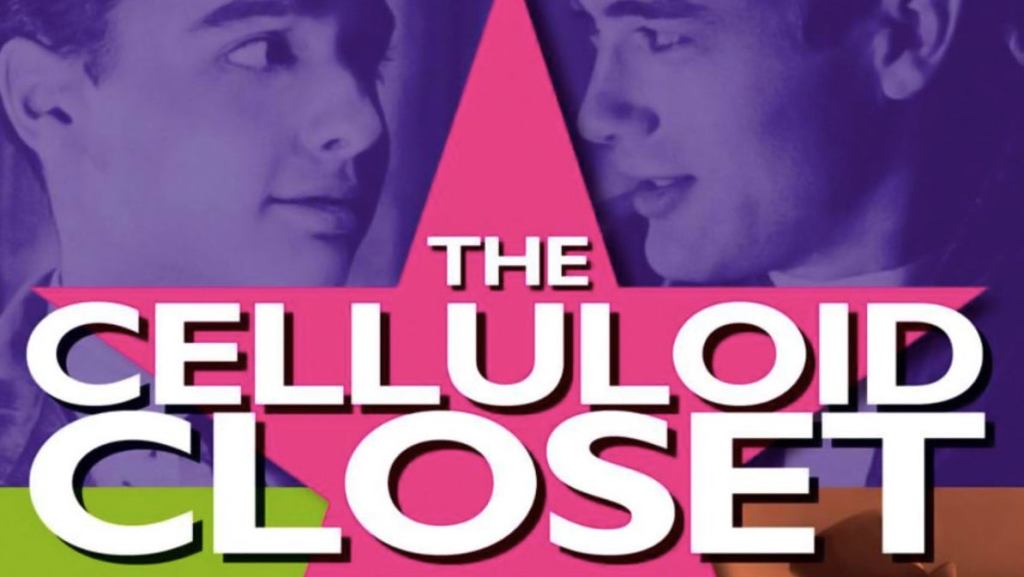
In our world where LGBTQ+ awareness and activism is so prevalent, it was very interesting to me to watch The Celluloid Closet. The documentary focuses on the portrayal of homosexual characters and relationships throughout film in the 20th century. It details the early depictions where gay characters were the butt of every joke, to turning them into the villains, to writing between the lines, and finally towards an era that is increasingly more welcome to showing homosexual relationships in cinema.
The most surprising part of this documentary to me was how early on gay characters were present in films. With the growing awareness and public education about LGBTQ+ communities I tend to think of it as more of a 21st century thing, so when this film opened with depictions of gay characters in the early 1900s, I was shocked. Of course, the fact that the characters were only present to be made fun of was expected. When The Celluloid Closet then said that religious virtues had an influence on Hollywood and what was allowed in films, it made complete sense to me. Christianity is everywhere and impacts everything, so the fact that it dictated what was allowed in films was unrelevatory to me, especially about homosexuality. Again, the fact that when homosexuality became more prevalent in films it was always portrayed as evil or shameful and the gay character(s) would die in the end came as no surprise. Even today in a world that claims to be open and welcoming, there are still large groups of people that are firmly against non-heteronormative acts, so it was easy to understand that that was the same case a century ago.
Something else that did surprise me, however, was when Hollywood began writing in between the lines and allowing subtext to shine through and create its own story. It seems that today in the 21st century we are always fighting for any sliver of LGBTQ+ representation, so the fact that Hollywood was subtly giving it to us back in the mid 1900s caught me by surprise. Even today in “progressive” blockbuster franchises such as Star Wars or the Marvel Cinematic Universe, we have to search for representation within tiny details. Is Captain Marvel gay? We would like her to be, but it will probably be a while until we find out for sure, and chances are high that she will not be. There was only one same-sex kiss in the most recent Star Wars film, The Rise of Skywalker, and it was between unimportant characters for only a split second at the end of the movie. The fact that we have to work so hard for even small moments like this yet Hollywood has been dropping hints for a long time was mind-blowing to me.
Honestly, I found The Celluloid Closet to be very applicable to our current cinema status. Most of the time, films and TV shows are not allowed to have explicit LGBTQ+ content for fear of hatred and failure. Only recently have more and more filmmakers braved to include those characters, and done it successfully. The CW DC comics Arrowverse shows have included countless gay, lesbian, or bisexual characters, and even have a transgender superhero played by a transgender actress.

Ruby Rose as Kate Kane, gay Batwoman
Another CW show, Supernatural, has also had many homosexual characters, yet it employs queerbaiting and shies away from confirming the biggest fan theory/desire (that is, quite frankly, backed by a lot of subtextual evidence throughout the fifteen seasons) that hunter Dean Winchester and angel Castiel are gay and in love. Even though these are clear instances of better representation in media, there are millions of other more popular and widespread content lacking in proper representation. Therefore to me, the observations made in The Celluloid Closet about the absence of real and obvious representation in Hollywood are still true, and it may still be a while before that is changed.
 Film, Gender, and Sexuality
Nothing angers more more than queer baiting. I agree that there are lots more “hints” being dropped in popular film and TV today, but I believe those “hints” are most often really queer baiting. It is the producers/writers/The Man’s way of playing to both sides. There are moments that can be *interpreted* as queer, but unless you are looking for it, and many straight/conservative audience members are not, then they appear to be platonic or hetero. I think this approach is very cowardly and reprehensible. Hopefully as the film industry continues, this embarrassing habit will be dropped.
LikeLiked by 1 person
Further agreeing with you and Claire, the early representation of LGBTQ+ characters and couples during the 1990s was shocking, mainly because it’s been almost 30 years since and it feels as if it hasn’t gotten any better. I am, however, thankful for networks like the CW that aren’t afraid to include, not only one show with an LGBTQ+ character but multiple shows on the network and even multiple characters within one show that are LGBTQ+. I think this representation is important because it shows a more accurate representation of the frequency of LGBTQ+ people around us in our real lives.
LikeLiked by 1 person
I was also very surprised by the early representation of LGBTQ+ characters in early film, I always thought it was more of a modern day media thing as well. And as you said although they had these characters they were almost always the butt of the joke, and it kind of makes me wonder whether having those early representations did more harm than good to the community. You made a really interesting point about religious virtues influencing Hollywood, and this was something that really surprised me being something I had no idea about. I was curious about how you’ve seen this in other films, as you said you already knew this Christianity influence was present. I thought talking about subtext was quite interesting, it’s something I never really think about but it is important; and you had really great examples of modern day media that has subtext on the characters sexuality. You made some really interesting points about the film industry and the LGBTQ+ community, I genuinely enjoyed reading your post!
LikeLiked by 1 person