Captain Marvel: A Feminist Film

Lately there has been a lot of talk about whether a piece of media is feminist or not. There are many different definitions and beliefs about what classifies a film as feminist, but the general consensus is that a feminist film is a political movement that aims to educate viewers about social inequality between men and women (ideally, a feminist film also refrains from sexualizing, demonising, and degrading women). The ever-more popular superhero genre in particular has received a lot of scrutiny over providing accurate representation–strong female characters and people who identify as LGBTQ+. The people in charge of those movies have historically not been very diverse in their representation, but lately, as the demand becomes greater and harder to ignore, they have slowly been doing better. The CW has a wide array of DC superhero shows that feature people of all different identities, and the DCEU released in 2017 a very successful solo-female feminist superhero movie Wonder Woman, and is in the process of preparing a sequel. The Marvel Cinematic Universe, however, is unfortunately a bit slower in its attempts to provide representation. For a long time the Marvel movies featured typically strong white males as the leads with very few powerful women present, and only recently with 2018’s Black Panther have they included significant characters of other races. The TV show Marvel’s Agents of S.H.I.E.L.D., to be fair, has had quite a few diverse superheroes and strong women, but Marvel’s television exploits are far less popular than their movies. Their plans for future films promise more LGBTQ+, racial, and gender representation, but for now, their best example is 2019’s Captain Marvel.
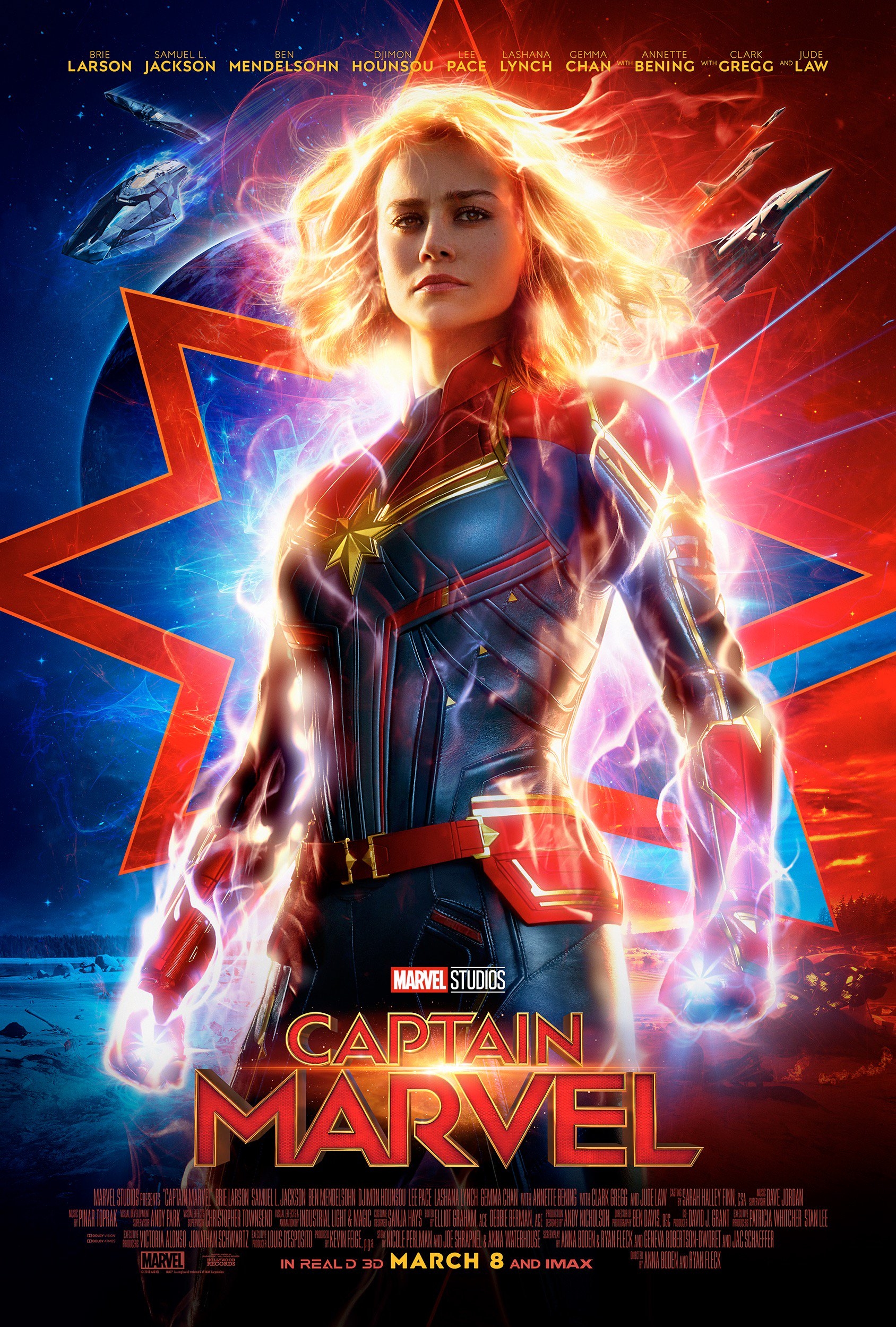
Captain Marvel (2019) - IMDb
Image Link: https://www.imdb.com/title/tt4154664/

Captain Marvel is set in the 90s and follows the Kree warrior Vers as she uncovers the secrets of her people and her past as a human U.S. Air Force pilot named Carol Danvers. It is Marvel’s first solo female superhero movie and really delivers in terms of supporting feminism, showing that a non-realist film can be feminist. Before diving into the story, it is clear from the female filmmakers (Anna Boden), screenwriters (Nicole Perlman, Meg LeFauve), and musical directors (Pinar Toprak) that this superhero film promotes the power of women.
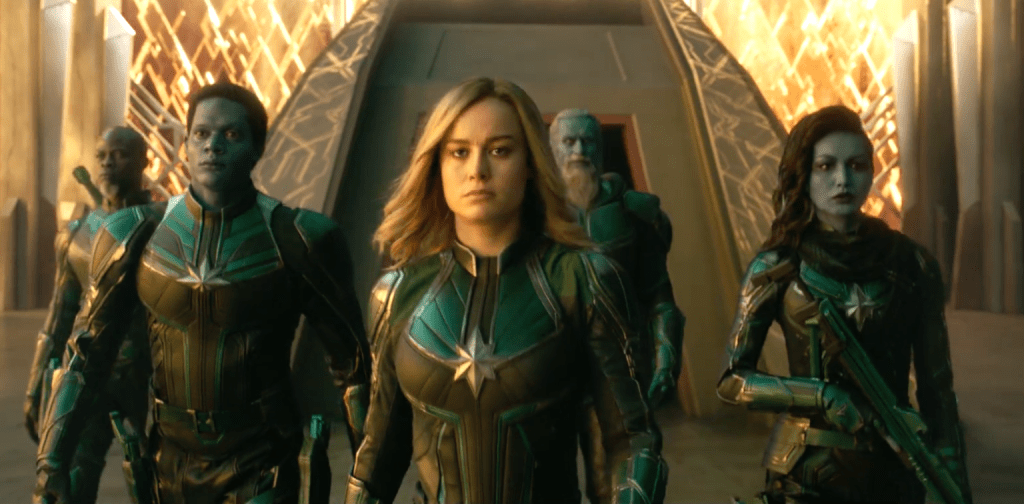
First and foremost, Carol is a female alien warrior, and no one ever questions that fact. She serves with other female warriors and their male teammates respect them completely. The evil Kree warrior Ronan calls Carol a weapon without an ounce of surprise or judgement. As she takes down countless Skrulls, Kree, and enormous spaceships and missiles, no one ever says “she’s powerful, for a woman.” The familiarity among the other aliens is understandable, but even on Earth in the 90s when there was still a long way to go for equality between men and women, she reveals the truth about aliens to Nick Fury and who she is and he never doubts her worth or ability because she is a woman.

Image Link: https://www.indiewire.com/2018/12/captain-marvel-official-trailer-brie-larson-1202024978/

It is inspiring to watch Captain Marvel and see Carol accepted as a strong and independent woman by everyone she meets without falling into “weak-women” stereotypes. The one typical attack on her gender–that women are more emotional and therefore less capable–is never even about gender. Yon-Rogg urges Carol to control her emotions, but he insists that that is necessary for any warrior, not specifically women.

Additionally, among the many empowering songs throughout the film, one of the final battles near the end between Carol and her mostly male enemies is accompanied by No Doubt’s “Just A Girl,” a song about Gwen Stefani’s experiences as a woman that men rarely share. This ties in to an earlier scene in the movie when Carol faces a situation many women have unfortunately had to navigate in real life–being told to smile by random strangers. While Carol is trying to figure out her next move on Earth, a man on a motorcycle approaches her and first sarcastically comments on her outfit, then tells her to lighten up, and finally asks, “got a smile for me?” When she ignores him, he calls her a freak. Throughout history and still today women have been told to smile by complete strangers because of the sexist and outdated belief that everything they do should please men, and there is never an easy way to deal with the situation. If the encounter occurs on the street, the man is likely to verbally abuse the woman if she does not comply, and if the the event happens in a work setting, the woman’s job and even her financial security could be threatened if she does not obey. Captain Marvel addresses this societal issue by presenting the situation but instead of getting flustered or worrying about the proper response, Carol ignores the biker and steals his bike. Granted, thievery should not be the response to something like this in real life, but it still shows that Carol does not care what others (men) think of her and promotes the message that other women should not either.

https://www.youtube.com/watch?v=mpsi1eWuhu0
Carol Danvers is told to smile

Another common trope among female superheroes (or any female leads in any genre of film) is to dress them in provocative and revealing clothing; Natasha Romanoff wears skin-tight leather suits, Diana Prince’s armor shows off most of her body, Supergirl’s costume sports a skirt instead of pants. Refreshingly, Carol Danvers’ uniform covers every inch of her skin and is entirely about functionality rather than appearance and appeal to the male gaze. Additionally, many superhero movies include a sexy “suit-up” scene that ultimately becomes provocative when it features women, but that scene in Captain Marvel is simply a little girl playing with the different colors on Carol’s suit. This helps reinforce the idea that women are strong, powerful, and valuable for their abilities and brains rather than their looks.

https://www.youtube.com/watch?v=lRyfhu12Gho
Carol Danvers and Monica Rambeau suit-up scene

Even before the incident that gave Carol superpowers and turned her into an intergalactic warrior, she was fighting against societal norms and being true to herself. As an Air Force pilot, she had to deal with arrogant men who were perceived as better than her just because of their sex. Throughout her entire life she faced criticism by men, but she never let that stop her. In one of the most powerful moments of the film, we see a montage of Carol falling or being put down by men, but she gets back up every single time. She is pushed down on the beach and gets back up. She falls off her bike and stands back up. She trips when swinging a bat and climbs to her feet. She crashes a go-cart and emerges from the dust as strong as before. She fails a rope course during her military training and is ridiculed by men but she gets back up immediately. Her plane is shot down but she stands ready to fight. With each instance, Carol rises and takes one step closer to becoming a great pilot, fighter, and person. The main theme of the entire movie is defying expectations and deciding for oneself what you can and cannot do. As Carol says at the end to Yon-Rogg, “I have nothing to prove to you.” Carol has nothing to prove to anyone, and neither do any other women. That is a powerful message for a superhero film to promote, especially a feminist one.

https://www.youtube.com/watch?v=c-3lSv-iCVE
Carol Danvers rises

The Bechdel Test is often used to evaluate representation within a movie, and Captain Marvel passes it with flying colors. To pass the Bechdel test, the subject must 1) have two named women, who, 2) talk to each other, 3) about something other than a man. Captain Marvel includes many conversations between Carol and Maria about each other, their past, and saving the world. Carol talks with Monica about their past, present, and future. Carol talks to Mar-Vell about the war they are fighting. Carol even talks to her ally-turned-enemy Minn-Erva about their relationship. Not every movie that passes the Bechdel Test can still be called feminist, but it is easy to see why Captain Marvel can with the wide range of empowering messages, images, and ideals it promotes.

https://www.youtube.com/watch?v=s_2HbawaNvs
Carol Danvers beats Yon-Rogg

Finally, the biggest piece of evidence proving that Captain Marvel is a feminist film is its lack of a love interest. There is subtext and debate over the exact nature of the relationship between Carol and her best friend Maria Rambeau, but ultimately the movie never centers on finding someone for Carol to spend her life with. The men in the movie are either Carol’s enemies whom she defeats epically or her allies who look to her for protection and leadership. Carol is never the typical action-film “damsel in distress” that needs rescuing, and in fact she is often the one doing the rescuing. Nearly every previous Marvel movie seemed to insinuate a romantic relationship between Natasha and one of the other heroes, and Wonder Woman told a clear love story between Diana and Steve Trevor, but Captain Marvel never forced in unnecessary romance, which is one of the biggest wins for feminism in film. Captain Marvel is very much a feminist film, and every woman should be proud to see it.

Sources:
Biller, Anna. “Let’s Stop Calling Movies Feminist.” Anna’s Blog. Blogger, 5 Feb. 2018. Web. 11 May 2020.
Captain Marvel. Dir. Anna Boden and Ryan Fleck. Prod. Kevin Feige. Perf. Brie Larson and Samuel L. Jackson. Walt Disney Studios Motion Pictures, 2019. Film.
Hole, Kristin Lené, and Dijana Jelača. “Narrative Film: Gender and Genre.” Film Feminisms: A Global Introduction. N.p.: Routledge, 2019. 265-305. Print.
Jusino, Teresa. “Alison Bechdel Would Like You to Call It the “Bechdel-Wallace Test,” ThankYouVeryMuch.” The Mary Sue. The Mary Sue, 25 Aug. 2015. Web. 5 May 2020.
Rosa, Joanne. “Gwen Stefani Says Feminist Anthem ‘Just A Girl’ Is about ‘power through Your Sexuality,’ Vulnerability.” ABC News. ABC News Network, 24 Sept. 2019. Web. 12 May 2020.
Smith, Rosa Inocencio. “The Sexism of Telling Women to Smile: Your Stories.” The Atlantic. The Atlantic Monthly Group, 27 Oct. 2016. Web. 12 May 2020.
Woolsey, Amy. “Before Batwoman: Looking at LGBTQ+ Representation in the Arrowverse.” Culturess. FanSided, 07 Aug. 2019. Web. 12 May 2020.

Blue

In praise of Blue – Derek Jarman's haunting reflection on HIV
https://lwlies.com/articles/blue-derek-jarman-haunting-reflection-on-hiv-aids/

Derek Jarman’s last film Blue is an experimental documentary/memoir about his life and his final struggle with AIDS. The film consists of a single stationary blue screen that remains unchanging throughout the entirety of the piece, accompanied by an intricate soundscape consisting of Jarman’s voice, the voices of close friends and collaborators, and a few sound effects and music choruses. It was an interesting experience to “watch” the film, since it was more about listening than seeing. Jarman decided to make the film in this way because he lost his sight due to AIDS, so it represents the last stage of his life and how he “saw” the world.

While watching Blue I found that I had to listen very carefully to even attempt to understand what was “happening.” With more traditional films, sound is not always as important and the viewer can occasionally guess what has been said by the images and actions. Blue had no such safety net, so unless I wanted to constantly rewind the film, I had to be very diligent in my listening. This was a little difficult for me since there was nothing for my eyes to focus on besides the blue screen, but there were a few moments when it was easy to pay attention.

The moments of the film that were particularly intriguing to me were those that included a musical chorus. The first time one occurred, it caught me by surprise and I was not able to really engage with it. Every other time one occurred, I listened carefully and even turned on the subtitles to be sure I understood the words. Once I knew what was being sung, however, I did not really understand the words. Like many songs, the lyrics were very metaphorical and symbolic, requiring the “viewer” to think on them for a while.

For example, one of the early refrains is “Blue protects white from innocence / Blue drags black with it / Blue is darkness made visible.” Those lines stuck with me long after the film was over as I tried to understand them. Is it that blue–representing Jarman’s blindness–enables him to see the world in different and possibly upsetting ways, thereby destroying innocence? If so, what is the white being protected? What is the black being dragged by blue? Why is blue “darkness made visible,” does it have anything to do with the correlation between blue and the feeling of sadness?

I am not sure I will ever know the answers to these questions, but it is interesting that Jarman included them. If the chorus were in a traditional film with many changing images, the significance of the words would potentially have been lost due to the fixation on the visual. What message did Jarman want to convey with all of the words he included in Blue, so much so that he forced viewers to really listen by giving them nothing else to focus on?

https://www.youtube.com/watch?v=zc5np6-sEG0

Blue can be called many things–a film, a podcast, a memoir–but I think that “documentary” is the most fitting. According to Film Feminisms by Kristin Hole and Dijana Jelača “the documentary is both an artistic object and an attempt to document a reality.” (175) The chapter on documentaries focuses on the fact that documentaries provide truth and strive to be objective, and yet there is always some sort of bias or constructed narrative. Blue is most certainly an artistic object and documented reality, and it does seem to be object, but it is deliberately constructed. In some ways, Blue is closer to a fictional film since it heavily dictates the information the viewer receives and how. Unlike traditional documentaries that document real life usually in real time, Blue is a reflection on Jarman’s life so he therefore decided what to include, what not to include, and how to order it. He decided to add musical choruses that were unlikely to actually have been created before the film.

Jarman managed to merge many forms of media with his film Blue. It is not a true documentary, nor is it a true memoir, podcast, or fictional film. Even at the end of his life and suffering from AIDS, he still managed to push the boundaries of film to create an everlasting and thought-provoking work.

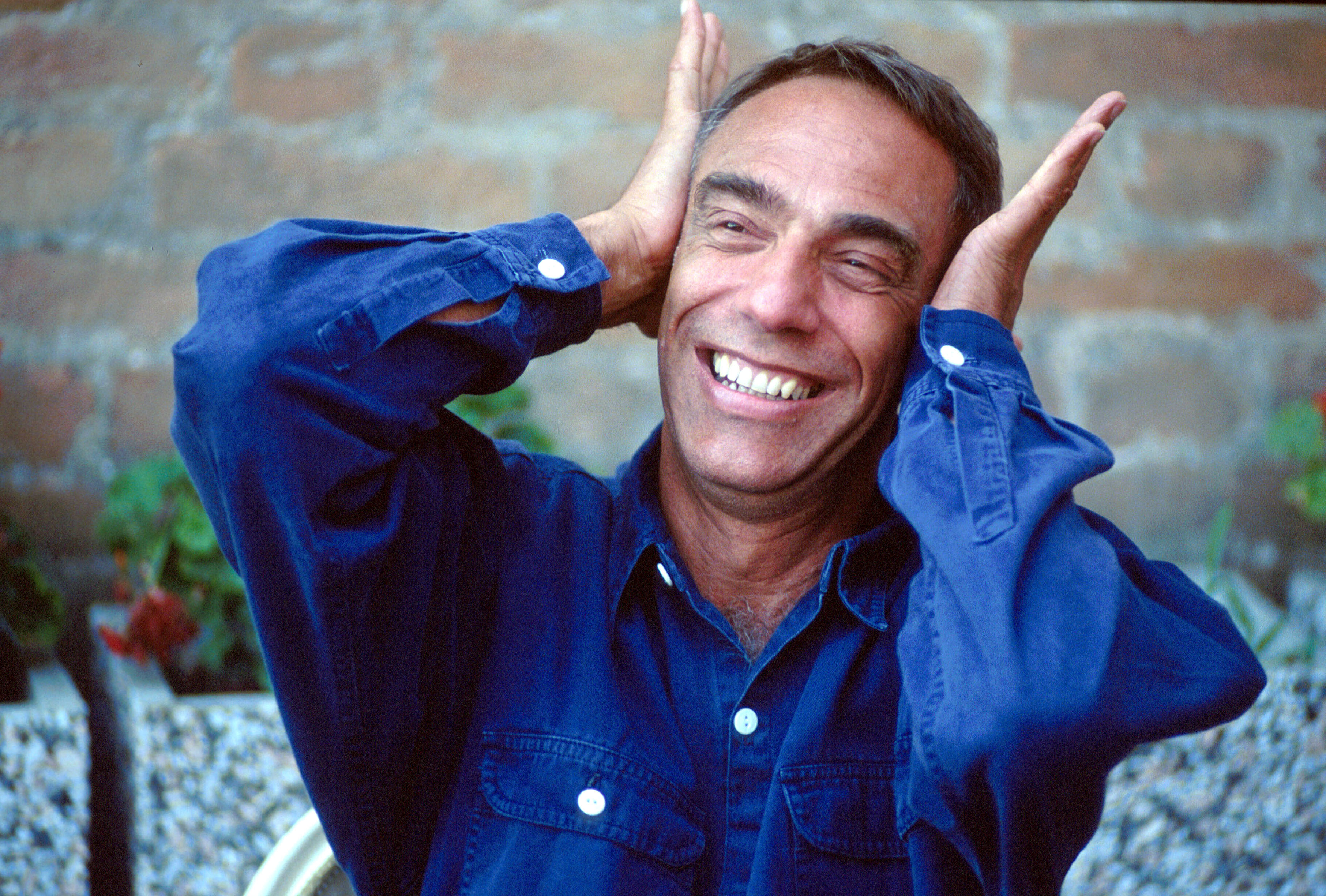
Derek Jarman - Wikipedia
https://en.wikipedia.org/wiki/Derek_Jarman

Paris is Burning

The drag ball documentary Paris is Burning (1990) was a very eye-opening film for me to watch. Beforehand, I knew very little about the drag balls and the people that participated in them (to be frank, I knew very little about most LGBTQ+ things, which is why I am trying to learn more). It was so interesting to watch this movie and to try to understand the lives these people live and what makes them happy. After I had finished it, I was very intrigued by the articles I read about it.

Daniel T. Contreras’ “New Queer Cinema: Spectacle, Race, Utopia” examines Paris is Burning and focuses in particular on the aspect of race. According to him, most critiques do not consider the importance of race in the film as much as they should. While reading his article, I agreed that race played a big role. Contreras’ main point is that Paris is Burning shows racial and utopian potentialities within New Queer Cinema. Everyone interviewed in Paris is Burning was a person of color, yet many of them seemed to idolize white people or see themselves as white in their imagined perfect life. In fact, Venus Xtravaganza, a transsexual Latina, even said “I want to be a spoiled rich white girl.”

Image result for venus xtravaganza
https://brightestyoungthings.com/articles/gay-icon-of-the-week-9-year-old-voguer/venus-xtravaganza
Venus Xtravaganza

Another article, bell hooks’ “Is Paris Burning?” also talks about the longing for “whiteness.” According to her, the black participants in the film do not want to become real black women but instead the idealized white woman. One of the film’s participants, Dorian Carey, mentions this as well when he says the femininity these women seek is perceived as white property. hooks goes on to say that the film is a “portrait of the way in which colonized black people . . . worship at the throne of whiteness” (hooks 149) despite the harm/humiliation it causes them. While I do not think I would go so far as to say that, I had also noticed while watching the film that many of the participants admired famous white people or aspired to be more white, so it was very interesting to me that Contreras and hooks placed so much emphasis on it.

I am not sure that I have the authority to say this, but I do not think that it was the film that brought this fact to light. What I mean by that is that the longing to be white seems to be more of something the participants of the film truly felt, rather than something orchestrated by the director Jennie Livingston. If that is the case, Paris is Burning seems to me like a commentary on this fact, because (at least, for me) that reality really stuck out and made me think about these people and how they live long after I had finished the movie. If not a commentary, it at least prompts people (like me) to think about it and the reality of our world.

https://www.youtube.com/watch?v=c4YUO1CudXY

Sources:
Contreras, Daniel T. “New Queer Cinema: Spectacle, Race, Utopia.” New Queer Cinema. 119-127.
hooks, bell. “Is Paris Burning?” Black Looks: Race and Representation. 145-156.

Restyling of Film

https://www.youtube.com/watch?v=8l3WC4wl-SY

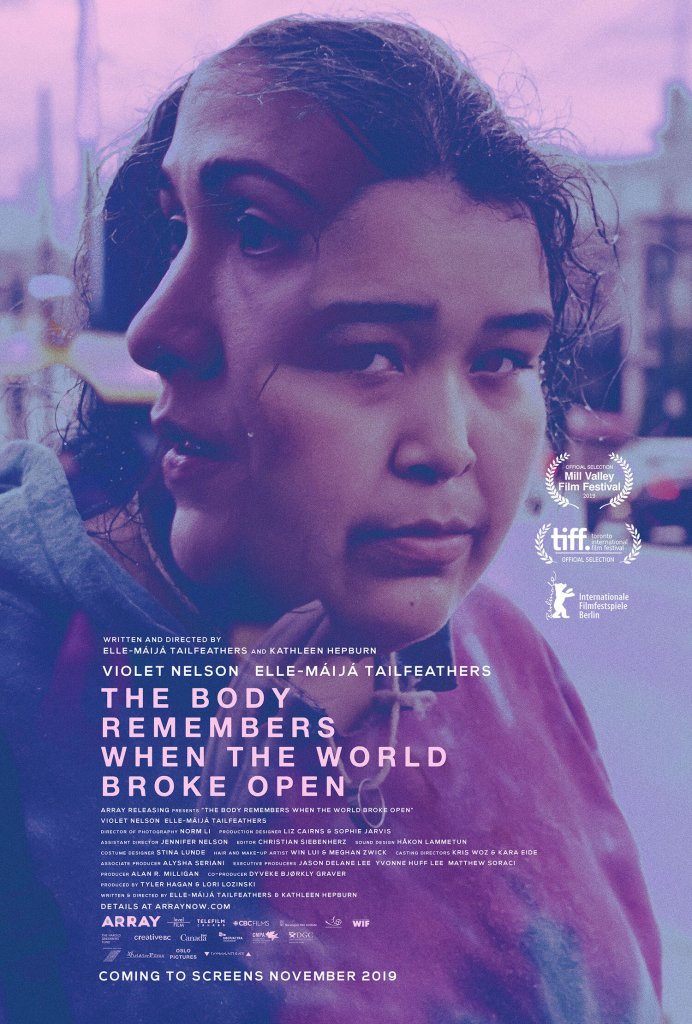
The Body Remembers When the World Broken Open is a 2019 Canadian film about a chance encounter between an older and more successful woman, Áila, and a younger and pregnant victim of domestic abuse, Rosie. Designed to depict the same timeframe as it takes to watch, the film follows their meeting and attempts to get help for the reluctant Rosie.

I did not like this movie. By filming it as one long continuous shot with the intent of making it feel as real as possible, it moved much too slowly for me to enjoy it. There was so much time spent following the characters as they went to a different room, or just watching them in awkward silences. I kept glancing at my watch as the film progressed, wondering how much more I had to endure. The slow pace made it very difficult for me to become invested in the story. I kept wondering why we were being shown something which distracted me from the overall plot of the movie–for example, I kept fixating on whether or not Rosie would ever confess to Áila about taking her wallet!

In addition, the dialogue and acting felt almost simultaneously very awkward and also very real. People do not come up with moving monologues on the spot like we tend to see in mainstream media, more often than not we fumble over our words and take long pauses and feel uncomfortable. That is what The Body Remembers When the World Broke Open did, it was sporadic and uncomfortable. Hollywood rarely represents that, however, so when this film made use of very authentic dialogue and casual acting, it was very jarring for me and again kept me from remaining engaged with the story. I am used to fast-paced Hollywood cinema, so this was a very big change. Even though it was more natural, it felt unnatural because of the norm we are exposed to.

That being said, the techniques that make the movie feel so long are perhaps very effective when considering its subject matter. Domestic abuse is a complicated subject, and for many of those that experience it, the path to safety is a long one. By filming the movie in this way, that longevity is really emphasized. As the character Sophie says, it can take many tries for someone to finally leave an abusive relationship. By making the film feel so slow, that unfortunate truth is accentuated and impressed upon the viewer.

It is interesting how the movie was authored by marginalized communities and employs marginalized techniques. As far as I know, there are not many films that rely on continuous shots or “authentic” dialogue and acting, because, as I mentioned, it can slow down the movie and make it difficult to interact with. It is not surprising to me, therefore, that it is these minority groups that have to courage to push boundaries and try new methods of filmmaking. The majorities know what works and have the privilege to continue making their films in their tried-and-true ways, while minorities must fight for what little they can get. Why not attempt something new when they can, especially if it could put them in the spotlight for being innovative and fresh?

While I do applaud the creativity and originality of The Body Remembers When the World Broke Open, I personally was not a fan, and I think that is simply because I am too accustomed to mainstream media.

The Celluloid Closet

In our world where LGBTQ+ awareness and activism is so prevalent, it was very interesting to me to watch The Celluloid Closet. The documentary focuses on the portrayal of homosexual characters and relationships throughout film in the 20th century. It details the early depictions where gay characters were the butt of every joke, to turning them into the villains, to writing between the lines, and finally towards an era that is increasingly more welcome to showing homosexual relationships in cinema.

The most surprising part of this documentary to me was how early on gay characters were present in films. With the growing awareness and public education about LGBTQ+ communities I tend to think of it as more of a 21st century thing, so when this film opened with depictions of gay characters in the early 1900s, I was shocked. Of course, the fact that the characters were only present to be made fun of was expected. When The Celluloid Closet then said that religious virtues had an influence on Hollywood and what was allowed in films, it made complete sense to me. Christianity is everywhere and impacts everything, so the fact that it dictated what was allowed in films was unrelevatory to me, especially about homosexuality. Again, the fact that when homosexuality became more prevalent in films it was always portrayed as evil or shameful and the gay character(s) would die in the end came as no surprise. Even today in a world that claims to be open and welcoming, there are still large groups of people that are firmly against non-heteronormative acts, so it was easy to understand that that was the same case a century ago.

Something else that did surprise me, however, was when Hollywood began writing in between the lines and allowing subtext to shine through and create its own story. It seems that today in the 21st century we are always fighting for any sliver of LGBTQ+ representation, so the fact that Hollywood was subtly giving it to us back in the mid 1900s caught me by surprise. Even today in “progressive” blockbuster franchises such as Star Wars or the Marvel Cinematic Universe, we have to search for representation within tiny details. Is Captain Marvel gay? We would like her to be, but it will probably be a while until we find out for sure, and chances are high that she will not be. There was only one same-sex kiss in the most recent Star Wars film, The Rise of Skywalker, and it was between unimportant characters for only a split second at the end of the movie. The fact that we have to work so hard for even small moments like this yet Hollywood has been dropping hints for a long time was mind-blowing to me.

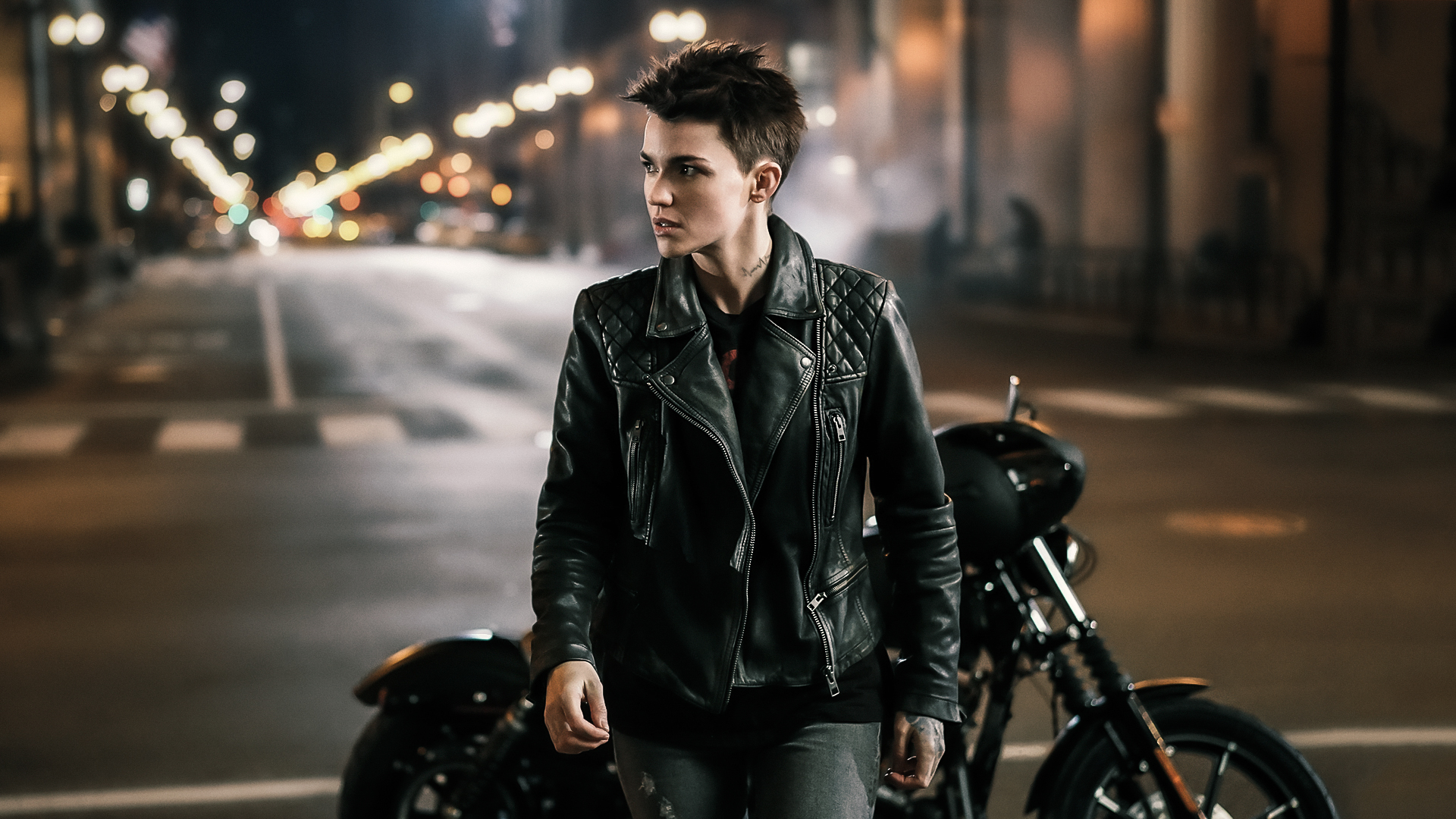
Honestly, I found The Celluloid Closet to be very applicable to our current cinema status. Most of the time, films and TV shows are not allowed to have explicit LGBTQ+ content for fear of hatred and failure. Only recently have more and more filmmakers braved to include those characters, and done it successfully. The CW DC comics Arrowverse shows have included countless gay, lesbian, or bisexual characters, and even have a transgender superhero played by a transgender actress.

Image result for batwoman
https://images.cwtv.com/images/c/0045/CW-BAT-101-Full-Episode_137473-3b58755b-1920×1080.jpg
Ruby Rose as Kate Kane, gay Batwoman

Another CW show, Supernatural, has also had many homosexual characters, yet it employs queerbaiting and shies away from confirming the biggest fan theory/desire (that is, quite frankly, backed by a lot of subtextual evidence throughout the fifteen seasons) that hunter Dean Winchester and angel Castiel are gay and in love. Even though these are clear instances of better representation in media, there are millions of other more popular and widespread content lacking in proper representation. Therefore to me, the observations made in The Celluloid Closet about the absence of real and obvious representation in Hollywood are still true, and it may still be a while before that is changed.

Sound in Horror Films

https://www.youtube.com/watch?v=T5ke9IPTIJQ

There are many elements that make up a film, but sound is everything. Before technology advanced we could only make silent films, but now that we can include sound, in my opinion, the films and TV shows are much better. Sound does so much on screen, whether it is dialogue conveying information to the audience, sound effects making it feel more real, or the soundtrack dictating the mood of a scene.

For horror films in particular, the soundtrack is instrumental in creating the suspense and fear that makes them successful. Horror movies would not be nearly as effective or perceived as well-made films without good music accompanying each scene. If a character alone at night was shown with light and happy music in the background, the audience would not fear for their life. If the same character was shown in the same situation but with dark and creepy music, most audience members would guess that they were about to die.

John Carpenter’s Halloween (1978) is no exception to this practice, and makes very good use of sound throughout the film. The opening credits are accompanied by high-pitched short staccato piano notes designed to raise fear in the audience and make them anxious for what is coming. This same music appears throughout the film in tense scenes where Michael Myers is stalking someone, and even though for most of the first two thirds of the movie his actions do not escalate to violence, the fear that they will is present in the minds of the audience members because of the music. Each time the camera follows someone or something and reveals that Myers is doing the same, the audience hears a distinct 3-note trill, also very high-pitched and short to be more effective in generating fear.

As someone who enjoys listening to soundtracks, I pay close attention to how the music affects me. When I listen to my favorite movie scores, I can usually tell exactly what scene each song was used for because I can connect the feelings it evokes in me with what I felt when watching the movie. Even without having seen Halloween before, the soundtrack worked very well to influence my emotions. Everytime the familiar Halloween theme played, I became anxious and worried about what might happen next. Often, nothing did, which just made me more agitated about the next scene. The music constantly made me watch the shadows or the background of the scene for Myers, because I knew he had to be there—and yet, sometimes he was not. Throughout the film, I noticed that sometimes the creepy music makes it all about what you do not see.

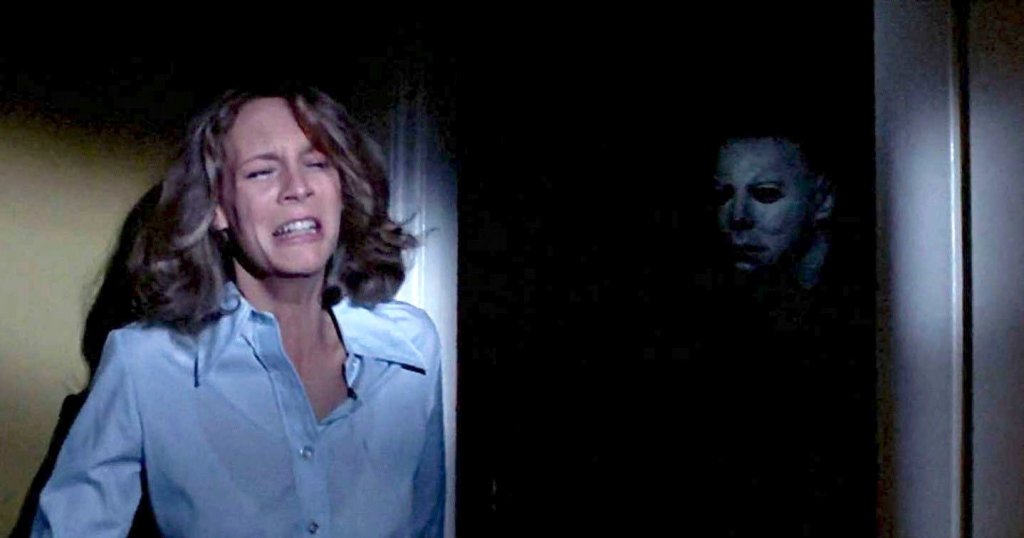
The absence of sound is very important, too. A few scenes in the movie were completely devoid of an accompanying soundtrack, instead focusing on natural sounds like footsteps and the rustling of clothes. Sometimes this was just because nothing “scary” was happening or about to happen, but other times the silence built up tension so that when Myers appeared in the shadows with his signature 3-note melody, the audience is terrified. A specific scene that made use of this was when Jamie Lee Curtis’ Laurie Strode was horrified upon seeing her friends’ bodies and Myers’ white mask is just barely visible behind her in the dark doorway.

Another effective use of sound in the movie was a repeated heavy breathing whenever the camera was in Myers’ point of view. The breathing was first introduced in the very first scene when Myers put on the clown mask and killed his sister. Every instance later where the camera follows Myers stalking someone, such as when Tommy Doyle is walking home from school, the audience cannot see Myers’ face but can hear the same heavy breathing which reminds them of the first scene and indicates that something bad is about to happen. At the end of the movie when Myers’ has inexplicably survived multiple stabbings, shootings, and a fall from a balcony, the audience hears the heavy breathing with increasing volume so that even though the immediate danger is over for the main characters, there is still the fear that something more will happen or that Myers might even show up in the real world.

Horror films would be much less effective in scaring audiences without carefully chosen sounds. While natural sounds are important too, it is the composed soundtrack that has the most impact on the audience. If a horror film played cheerful music the entire time, it would not be as successful in creating fear. It might work for quick jump scares since the audience would not be expecting anything, but the thing that makes horror movies great is their suspense and lasting fear. Good horror movies make the audience scared throughout the film, not for a split second after someone jumps out of the shadows. Movies like Halloween make excellent use of soundtracks to keep their audience scared for the entirety of the film and well beyond.

https://www.youtube.com/watch?v=amZQdMtjNA8

About

Hello and welcome to my blog! My name is Tara Mann, I am a sophomore Creative Writing student minoring in Computer Science at Chapman University. I am originally from Monterey, CA, I love all things musical theatre, and I enjoy watching movies and TV shows. Since I am primarily a writer and also an actor, when watching I tend to focus on the writing and acting within a film/TV show, rather than the camera angles, lighting, editing, etc. In addition, I enjoy singing and playing piano so I pay close attention to soundtracks since they have a big effect on the general feel of the movie/TV show.

My interests range through nearly all genres of film, but my favorites tend to be action, sci-fi, superhero, or musical. Action, sci-fi, and superhero movies interest me because of the suspense, intensity, and mystery often surrounding them. They keep me on the edge of my seat and I always notice something new when I watch them. With musicals, I love seeing how they are brought to life on screen rather than onstage and comparing how they were changed to fit the medium better.

I am really excited to explore films I have not been introduced to yet, specifically through the lens of feminism and LGBTQ+ representation. As a straight white cisgender female, I have some privilege and very little understanding of what others experience. I hope to fix that by examining films that are related in some way to gender and LGBTQ+ issues, and hopefully become a better ally possessing a more open mind.

Design a site like this with WordPress.com
Get started