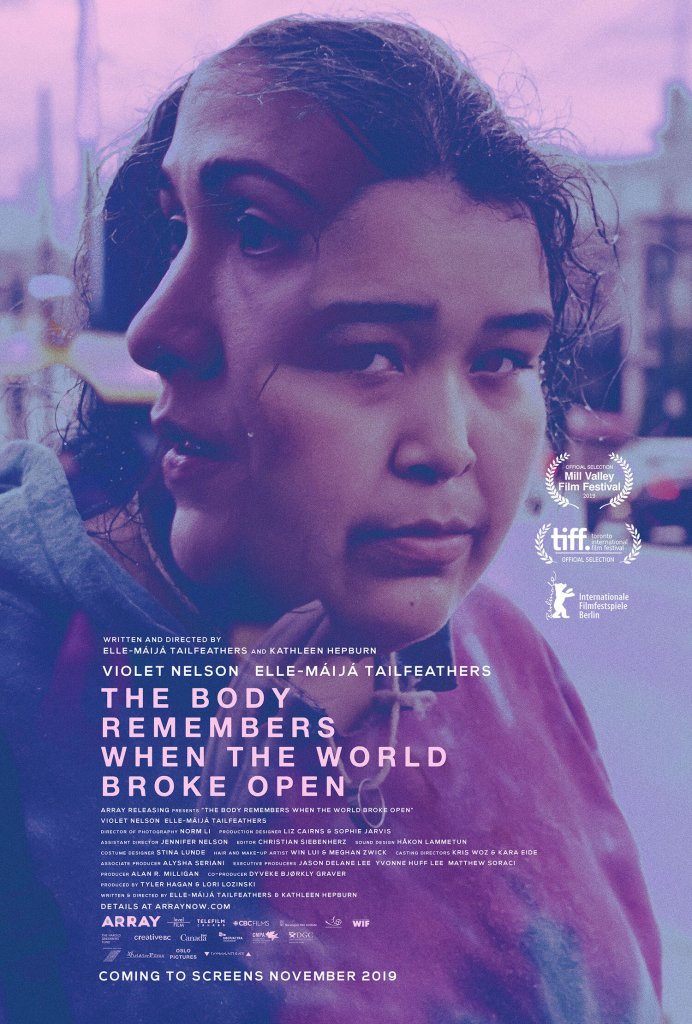
The Body Remembers When the World Broken Open is a 2019 Canadian film about a chance encounter between an older and more successful woman, Áila, and a younger and pregnant victim of domestic abuse, Rosie. Designed to depict the same timeframe as it takes to watch, the film follows their meeting and attempts to get help for the reluctant Rosie.
I did not like this movie. By filming it as one long continuous shot with the intent of making it feel as real as possible, it moved much too slowly for me to enjoy it. There was so much time spent following the characters as they went to a different room, or just watching them in awkward silences. I kept glancing at my watch as the film progressed, wondering how much more I had to endure. The slow pace made it very difficult for me to become invested in the story. I kept wondering why we were being shown something which distracted me from the overall plot of the movie–for example, I kept fixating on whether or not Rosie would ever confess to Áila about taking her wallet!
In addition, the dialogue and acting felt almost simultaneously very awkward and also very real. People do not come up with moving monologues on the spot like we tend to see in mainstream media, more often than not we fumble over our words and take long pauses and feel uncomfortable. That is what The Body Remembers When the World Broke Open did, it was sporadic and uncomfortable. Hollywood rarely represents that, however, so when this film made use of very authentic dialogue and casual acting, it was very jarring for me and again kept me from remaining engaged with the story. I am used to fast-paced Hollywood cinema, so this was a very big change. Even though it was more natural, it felt unnatural because of the norm we are exposed to.
That being said, the techniques that make the movie feel so long are perhaps very effective when considering its subject matter. Domestic abuse is a complicated subject, and for many of those that experience it, the path to safety is a long one. By filming the movie in this way, that longevity is really emphasized. As the character Sophie says, it can take many tries for someone to finally leave an abusive relationship. By making the film feel so slow, that unfortunate truth is accentuated and impressed upon the viewer.

It is interesting how the movie was authored by marginalized communities and employs marginalized techniques. As far as I know, there are not many films that rely on continuous shots or “authentic” dialogue and acting, because, as I mentioned, it can slow down the movie and make it difficult to interact with. It is not surprising to me, therefore, that it is these minority groups that have to courage to push boundaries and try new methods of filmmaking. The majorities know what works and have the privilege to continue making their films in their tried-and-true ways, while minorities must fight for what little they can get. Why not attempt something new when they can, especially if it could put them in the spotlight for being innovative and fresh?
While I do applaud the creativity and originality of The Body Remembers When the World Broke Open, I personally was not a fan, and I think that is simply because I am too accustomed to mainstream media.
 Film, Gender, and Sexuality
I certainly note your critique of the film’s construction and pacing. Certainly Hollywood and mainstream cinema is not paced in this slow and deliberate way so it makes sense that many would find the style of the film to be offputting or even unbearable. For me, when examining the intersection between filmic content and style, I often try to find the reason for this marriage. In this film, as you note, the startling reality of abuse links the film’s content with the style: forcing the audience to experience every single excruciating second that the main character does. Film has the unflinching ability to portray very real seeming events on the screen. The question for me always is, is this the most effective way to tell this story? And depending on who you ask, you’d get many different answers.
LikeLiked by 1 person
I also wrote about this film and found the same quarrels with its pacing. I frequently lost interest. I did extensive outside research on this film afterward to answer some of my technical questions, and so I understand the intention behind the pacing. However, knowing “why” doesn’t make it any faster and easier to focus on. The story and meaning, and also the story behind the film’s concept are very moving. I found myself feeling very sympathetically towards the characters and the story, despite losing interest and fading in and out of the narrative. However, domestic violence, as you mentioned, is quite a complicated topic and is very rarely touched due to its serious lasting mental and physical implications. I appreciated your addition to the video at the beginning. For someone who has not seen the film and is just reading your post, it can give them a very accurate glimpse into the direction this film takes. It is easier to understand your blog with the context of course. Even without the video, you do a great job at giving very good and accurate descriptions and detailed clarifications throughout the post.
LikeLiked by 1 person